


Living with anxiety in the Gulf during regional conflict
Living in the Gulf has long been associated with stability and safety. When regional conflicts escalate and missiles or drones enter Gulf airspace, life can stop feeling predictable. Your days might still be full of online classes, work calls and everyday tasks, but the background has changed.
This article is for people who are currently living in GCC countries: Bahrain, Kuwait, Oman, Qatar, Saudi Arabia or the UAE. It is for anyone who notices that nearby conflict, frequent alerts or war news are affecting their mental health. If you are temporarily outside the region, or part of the diaspora, this article may not fully reflect your situation. We will publish separate pieces for your experience and link them near the top of this page so you can move straight to the one that fits you.
Who this article is for
Many people across the Gulf are living with a background hum of worry right now, even as day‑to‑day routines continue. You might be in Dubai, Abu Dhabi, Ras Al Khaimah, Riyadh, the Eastern Province, Bahrain, Doha or Kuwait. You may be following updates about nearby attacks between meetings or calls, or trying to care for your family while messages keep coming in.
If any of this resonates, you are in the right place. This article will not tell you how anxious you should feel or what choices to make. Instead, it aims to describe what many people in the Gulf are going through. It also offers options for looking after your mental health in the middle of uncertainty, based on research and clinical practice.
For some people in the Gulf, anxiety is not about one conflict but several. Some residents are experiencing war where they live and in places they are from, or where close family still are. You can be affected in more than one way at the same time. You might worry about safety in the UAE and also feel fear and grief about loved ones in Palestine, Iraq, Iran or Lebanon, for example. Naming this layered reality matters when we think about anxiety.
What makes this conflict feel different in the Gulf
Many people in the Gulf describe living with the threat and presence of war without, so far, the same scale of destruction seen elsewhere in the region.
So far, reports suggest that civilian casualties in GCC countries are lower than in some other parts of the region. In places such as parts of Palestine, Lebanon, or Iran, people are facing heavy bombardment and large‑scale displacement. At the same time, people are living with repeated alerts about missiles and drones entering Gulf airspace. Many projectiles are intercepted by defence systems. In some cases, strikes or falling debris have damaged facilities, including oil‑related or logistical sites. So far, reports suggest that this damage has mostly been local, rather than causing a full collapse of essential services.
In the region, people often talk about what might happen if key infrastructure was hit harder. They mention ports, oil facilities and desalination plants in these conversations. Even when larger disruptions have not happened, the possibility alone can unsettle a long‑held sense of safety and add to ongoing anxiety.
How nearby conflict and uncertainty can intensify anxiety
Large regional datasets that include GCC countries suggest that anxiety and depression already have a big impact on health in the Middle East and North Africa.
One analysis of Global Burden of Disease 2021 data estimated that anxiety disorders in the region cause many years of disability.
The same analysis found that this burden is especially high for teenagers and young adults.
The authors said that, with ongoing social, economic and political pressures, anxiety disorders in this region need care that is easy to access, affordable and multidisciplinary.
Studies that combine data from people living in intense war zones suggest that, during active conflict, about one in three people may have significant symptoms of anxiety or depression.
A World Health Organization‑supported analysis also estimated that, on average, about one in five people in conflict‑affected settings live with a mental disorder such as depression, anxiety, post‑traumatic stress disorder, bipolar disorder or schizophrenia.
The same analysis found that around 5% live with a severe mental disorder.
These numbers come from places with far more destruction than most areas of the GCC. People here are also living with repeated alerts and strikes in and near their airspace.
Taken together, this research suggests that living with ongoing uncertainty and exposure to conflict puts real pressure on mental health.
This is true even if you are not in the places facing the most visible damage.
War news, social media and the feeling of being “there, but not there”
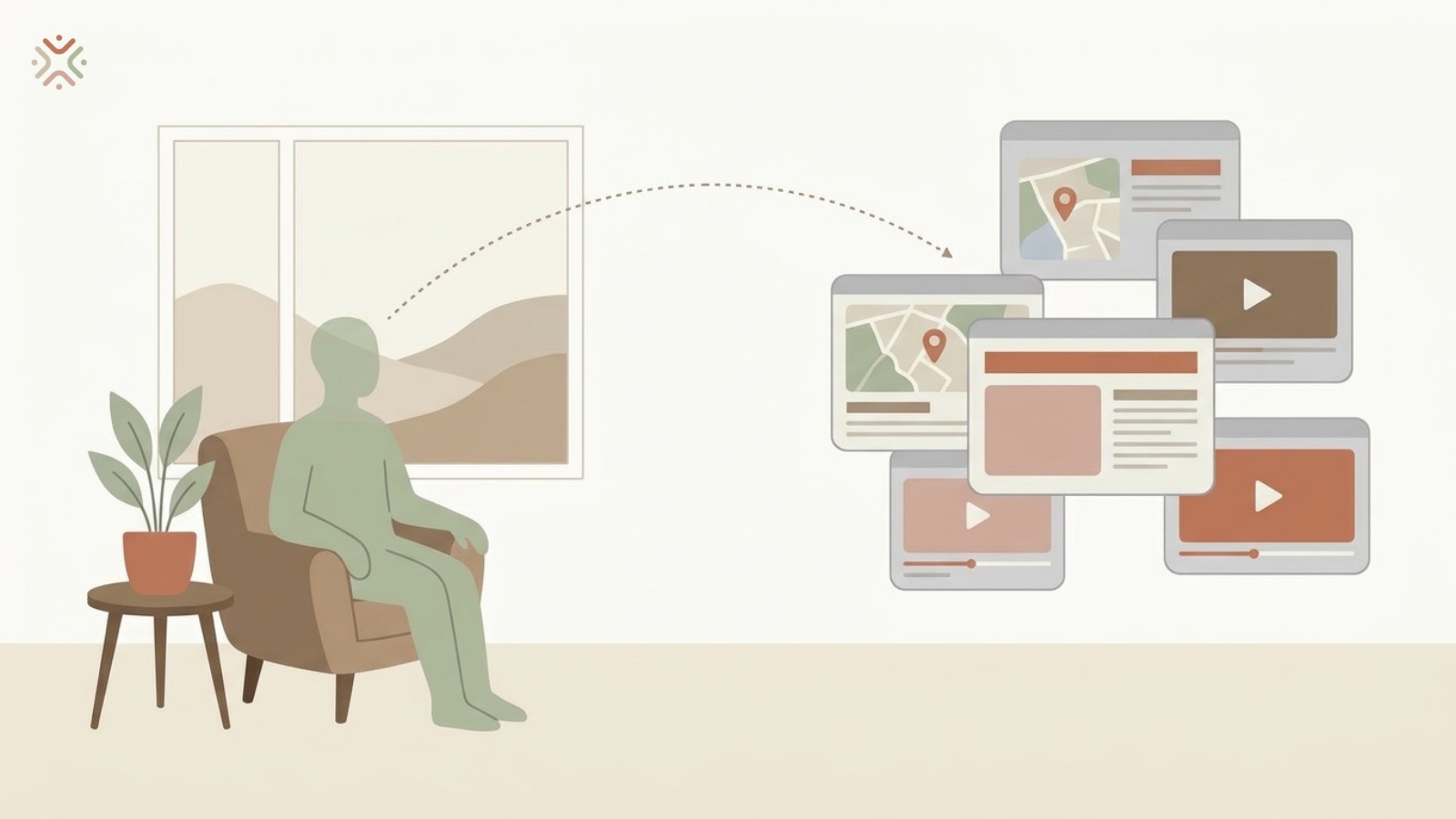
For many people in the Gulf, this conflict is mainly felt through screens. You might see news alerts, videos, comment threads and group chats with friends and family across the region. You can feel both far away and very involved at the same time.
Research from several Arab countries after the escalation of the Israel–Palestine conflict found a pattern. People who spent more time watching war‑related media tended to report higher levels of depression and acute stress. These problems were also closely linked with insomnia. Other studies of media coverage of mass violence suggest that repeated exposure to graphic images can add to psychological distress and, in some cases, secondary trauma.
This does not mean you must stop following the news or avoid social media. It does suggest that it helps to be thoughtful about how much, how often and what kind of content you take in. This is especially important if you notice your sleep or mood getting worse.
Common ways anxiety in the Gulf might show up right now
People in the region are reporting many overlapping experiences, for example:
- Hypervigilance
in places that used to feel unquestionably safe. You might feel on edge in shopping malls, cafés, mosques, churches or metro stations, even when nothing specific is happening nearby.
- Body symptoms without a clear medical cause
You may notice tightness in your chest, a racing heart, dizziness, stomach issues, tension headaches or difficulty sleeping, especially after reading or watching war news.
- Decision paralysis
You might feel stuck between staying, leaving for a while, or making a bigger move. Each option can bring its own fears, practical challenges and social reactions.
- Guilt and “comparative suffering.”
You may wonder whether you are “allowed” to feel anxious or overwhelmed when you are not in areas facing the most intense bombardment in the region. As a result, you might minimise your own distress.
Large reviews of conflict‑related mental health strongly suggest that anxiety, low mood and post‑traumatic stress symptoms are common in people exposed to war, even when they are not on the frontlines.
These reactions are understandable responses to an abnormal situation.
Evidence‑informed ways to look after your mental health in the Gulf
Everyone’s situation is different, and there is no single right way to cope. The suggestions below draw on research from conflict‑affected and high‑stress settings. They turn some of the core ingredients of effective interventions into everyday steps you can try.
Start with what is actually weighing on you
In research on conflict‑affected communities, some brief psychological interventions start by mapping people’s current stressors, such as safety concerns, employment, visas, caregiving or family conflict. They then support structured problem‑solving around these stressors. These approaches have been found to reduce symptoms of depression and anxiety compared with usual care.
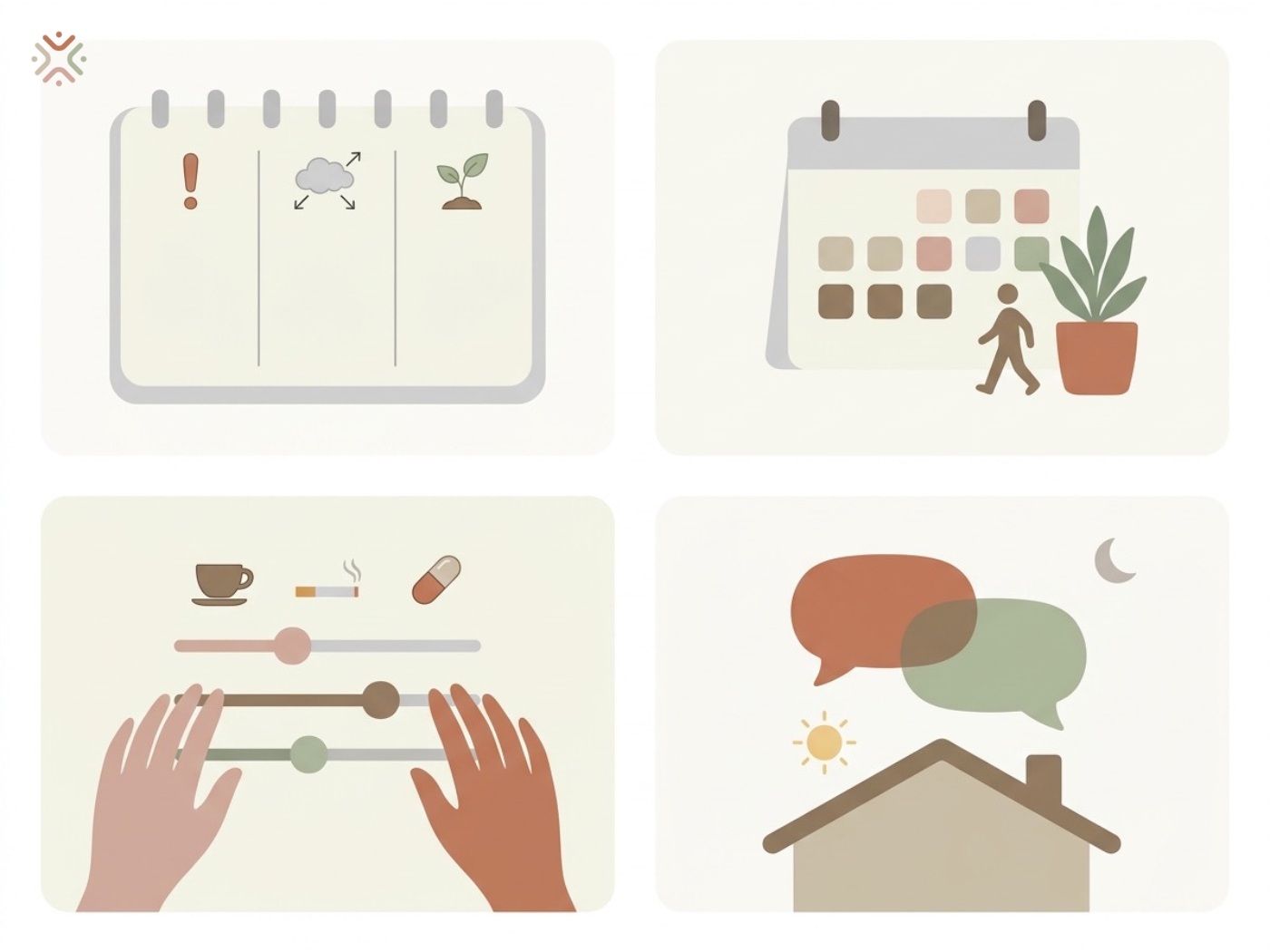
You can try a simple version of this yourself. Take a piece of paper and divide it into three columns:
- “What I’m worried about.” For example: “If the conflict gets worse, will my job in the Gulf still be secure?” “What happens to my residency if my company downsizes?” “How will I cope if I need to move again?”
- “What is outside my control”. For example: “decisions about missile defence”, “global oil prices”, “other people’s social media posts”.
- “What I might be able to influence this month.” For example: “Ask HR what scenarios the company is planning for.” “Check my savings and emergency contacts.” “Limit how often I read graphic news before bed.” “Book a session to talk through options with a therapist.”
Choosing one or two items from this third column and working through them step by step is closer to what evidence‑based brief therapies do than simply telling yourself to “cope better.”
If you feel you would benefit from focused support rather than open‑ended therapy, you might look for someone who offers brief, goal‑oriented work. At Thera, Steve Mackenzie Villar offers brief, solution‑oriented and systemic interventions. In simple terms, that means agreeing on a clear focus together. For example, you might decide to work on how to navigate job or residency uncertainty. You then explore how different parts of your life and relationships are involved. Together, you work towards practical steps over a set number of sessions.
You may also find it helpful to read Understanding fear of change: Navigating metathesiophobia. It looks at how fear of change can show up and offers ways to approach it.
Protect what keeps you going day to day
Across many different settings, some therapies help people re‑engage with small, meaningful activities. This is often called “behavioural activation.” Research suggests that this can improve depression and anxiety symptoms and support overall well‑being. What matters is that these activities fit your values and give your mind brief rests from constant threat‑monitoring.
In the Gulf right now, that might look like:
- Cooking a simple meal you enjoy and eating it away from your phone.
- Taking a short walk in your neighbourhood at a time that feels safe to you.
- Reading to your child at bedtime, even if your own mind is busy.
- Spending half an hour on a creative hobby, such as sketching, calligraphy, crafts or playing music. These kinds of activities have been used in group programmes to support mood and coping in people affected by war and disasters.
- Attending prayers or spiritual gatherings, when it is safe to do so.
Meta‑analyses suggest that these kinds of “activation” ingredients are one of the active components of many effective interventions for young people and adults with depression and anxiety. Continuing them during a crisis may help keep some anchors in a moving sea.
Notice how you are coping, not just how you are feeling
In one community study of people exposed to regional conflict, researchers found that tobacco and alcohol use went up after war broke out. Sleep and emotional distress also got worse. These are understandable attempts to get through a frightening time. Over months, though, they can lead to more anxiety, poorer sleep and health problems.
If you notice yourself drinking, smoking or relying on sedatives more than usual, you do not need to judge yourself. It may help to mention this to a therapist or doctor. Together, you can explore small, realistic changes. For example, you might set a limit on certain days, change routines that are closely linked to smoking or drinking, or try other ways to unwind at night.
Draw on sources of strength that matter in this region
One qualitative meta‑synthesis looked at people from Arab countries who had lived through war and political conflict. It found that, alongside distress and loss, many people also described resilience and post‑traumatic growth. They spoke about ways of coping that drew on shared cultural, spiritual and community resources. These included faith practices, a sense of shared fate, mutual aid, humour, and collective storytelling.
In the Gulf, that might translate into:
- Leaning on spiritual practices
that help you make meaning of events.
- Spending time in community spaces
whether online or in person, where people share your language and cultural references.
- Supporting humanitarian efforts
in ways that feel sustainable for you, rather than overwhelming.
- Connecting with others
who hold similarly complex feelings about staying, leaving, or “belonging in two places at once”.
There is no single “right” way to be resilient. But it may help to ask: What has helped me get through upheaval before? What aspects of my culture, community or faith feel like a resource to me now?
If you are parenting in the middle of this
Children often pick up more than adults realise. They hear snatches of conversation, see news alerts on phones and notice changes in adults’ moods.
Meta‑analyses of psychological and psychosocial interventions for children and adolescents in low‑ and middle‑income countries, including conflict‑affected settings, suggest that structured programmes can reduce symptoms of anxiety, depression and post‑traumatic stress when compared with control conditions. Many of these programmes involve parents. The material conditions in those settings are often very different from life in the GCC. Even so, some core ingredients seem to help children in many places. These include having space to express feelings, receiving clear and age‑appropriate information, staying connected to supportive adults and keeping some routines. Those same ingredients are relevant for families living with regional conflict here as well.
When you talk to children about what is happening, it can help to:
- Use simple, concrete language for younger children (roughly under 8):
For example, “There is fighting in our country. The adults here are working hard to keep people as safe as possible. You might see videos or hear people talk about it, and it’s okay to ask questions.”
- Correct misinformation gently with older children and teenagers:
For example, “Some of the videos on social media are real and some are not. If you see something that worries you, please bring it to me so we can look at it together.”
- Name feelings and normalise them:
“It’s understandable to feel scared, angry or confused when you hear about war. I feel some of those things too. We can talk about it.”
- Keep key routines as steady as possible:
This is especially important for sleep, schoolwork and time with friends. Try to do this while still making space for questions and worries.
At Thera, we work with adults, not children.
Some therapists focus on supporting parents during times of conflict.
If you want this kind of support, you can look at profiles such as Monika Hadisfar (Farsi and English) and Ataa Atoun (Arabic and English). They both work with parents on family dynamics and parenting challenges.
For concerns about adolescents’ adjustment, you may be drawn to therapists like Douaa Harb (Arabic and English) or Joseph Assal (Arabic and English). Joseph has extensive experience with young people and trauma.
If you want someone familiar with humanitarian crisis contexts, you may also feel drawn to Alessandra Sacchetti (Italian and English).
The conflict may also put strain on relationships at home. You might disagree about staying or leaving, or about how to cope. Resources like Family Therapy: Rebuild trust, resolve conflict & strengthen relationships can offer another angle on getting support as a family.
When it may be time to seek professional support
It might be helpful to talk to a therapist if, for several weeks or more, you notice that:
- You struggle to fall or stay asleep, or you wake from recurrent nightmares.
- You feel constantly on edge, jumpy or numb, and find it hard to experience pleasure.
- You notice significant changes in appetite, energy or focus.
- Work, studies, parenting or basic self‑care are becoming difficult.
- You find yourself relying more on alcohol, sedatives or other substances to cope.
Research on people exposed to conflict suggests that many develop some psychological symptoms. A smaller group go on to have more persistent anxiety, depression or trauma‑related difficulties, and these can benefit from evidence‑based support. Seeking help does not mean your situation is “as bad” as those in frontline areas; it means you are taking your distress seriously.
If you are curious about what starting therapy might look like, Your first therapy session: What to expect and how to prepare effectively offers a step‑by‑step overview.
Quick questions people often ask
Is it normal to feel anxious if I am not in the worst‑hit areas?
Yes. Large studies in conflict‑affected regions suggest that anxiety and low mood are common even among people who are not in the most heavily bombarded locations. Feeling affected by what is happening around you does not mean you are overreacting.
Is it “wrong” to think about leaving, or to stay when others leave?
There is no single right choice. People’s decisions are shaped by many things, such as family, work, visas, money and health. Each option can bring its own kind of fear and grief. Talking this through with someone neutral can help you weigh up what matters most to you.
How do I know if I should seek therapy rather than just leaning on friends and family?
If anxiety is making it hard to function day to day, therapy may help. It can also help if you feel stuck in patterns that are not shifting, even with support from people close to you. Friends and family are important. Therapy does something different, because it gives you a dedicated space to focus on your experience.
How Thera can support people in the Gulf
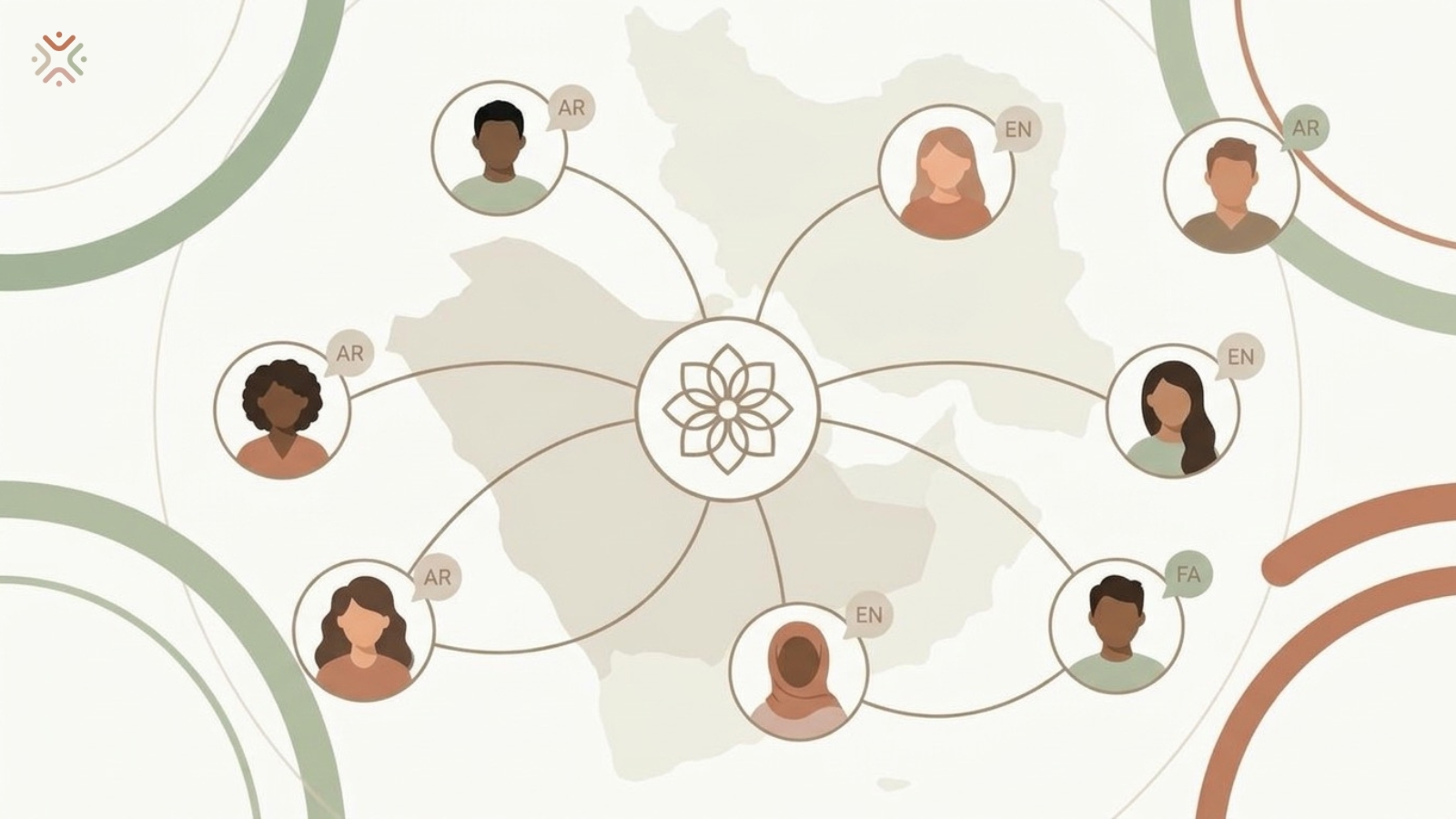
If you are living in the GCC and feel overwhelmed by anxiety, we are here to support you. Thera connects clients with therapists who understand the realities of living in our region. Many of them know what it is like to hold more than one homeland, to face shifting geopolitics and to live across cultures.
Our therapists collectively work in more than 17 languages, including Arabic, Farsi and Kurdish, as well as English and many others, which can help you explore complex emotions in the language that feels most natural to you. Whether you are a high‑achieving professional trying to hold a lot together, a parent absorbing your children’s questions, or someone whose distress does not always show clearly on the outside, speaking with a therapist can offer a confidential space to make sense of what you are feeling and to explore options that fit your values.
This article does not replace personalised care, but it may be a starting point for understanding your experience and deciding whether you would like additional support.
If you or someone you know is in crisis
Please reach out for immediate support:
International: Befrienders worldwide
USA: 988 Suicide & Crisis lifeline: call or text 988
UK: Samaritans: call 116 123
UAE: MOHAP Mental Health Helpline: 800 HOPE (4673)
Middle East & North Africa: Embrace lifeline
If you are in immediate danger, please call your local emergency services.
References:
Clinically reviewed by Dr. Lina Khoury, Clinical Psychologist
Category
 Previous article